Building Against the Storm: Kent Pecoy How Climate Reality Is Reshaping American Luxury Homes
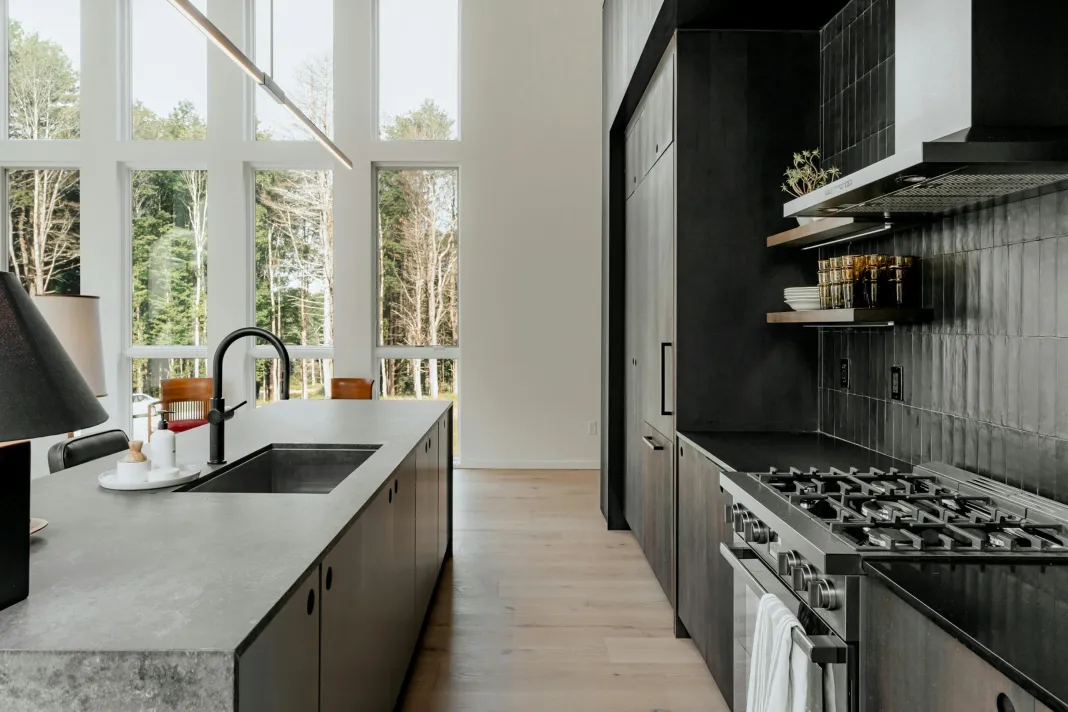
For decades, luxury housing along America’s coasts was defined by views, scale, and proximity to the water. Climate risk was acknowledged, but often treated as an abstract concern—something to insure against rather than design for.
That assumption no longer holds.
As hurricanes intensify, sea levels rise, and insurance carriers retreat from high-risk regions, coastal construction has become a proving ground for the future of American housing. The homes rising today in hurricane zones are not just responding to climate reality—they are shaping a new national standard for resilience, safety, and long-term value.
Few builders understand this shift more clearly than Kent Pecoy.
With more than four decades in residential construction across New England and Southwest Florida, Pecoy has watched building codes, materials, and expectations evolve in response to increasingly severe weather events. As general manager of Coastal Homes of Marco Island, he operates at the intersection of climate exposure, regulatory pressure, and luxury demand.
“We’re past the point of building for what was,” Pecoy says. “Now we’re building for what’s coming.”
The Insurance Wake-Up Call
If hurricanes are the visible force reshaping coastal housing, insurance is the invisible one. In recent years, major carriers have reduced coverage, raised premiums, or exited coastal markets altogether. For homeowners and developers alike, insurance availability has become a gating factor—sometimes more decisive than price or location.
This retreat has forced a reckoning. Homes that once passed as luxury now struggle to qualify for coverage unless they meet stringent resilience standards. Elevated foundations, impact-rated windows, reinforced roofing systems, and flood-resistant materials are no longer optional upgrades. They are prerequisites.
For veteran builders, the shift feels overdue.
“Insurance companies are responding to data,” Pecoy notes. “Storm frequency, repair costs, rebuilding cycles—they all point in the same direction. The homes that survive are the homes that were built right in the first place.”
Codes as Climate Strategy
Nowhere is the relationship between climate and construction more evident than in building codes. Florida’s post-hurricane code revisions, often viewed as costly or restrictive, are increasingly recognized as among the most rigorous in the country.
These standards demand more than compliance. They require builders to rethink everything from structural load paths to material selection and site planning. For those willing to adapt, codes become less a burden than a framework for innovation.
“Every major storm rewrites the rulebook,” Pecoy says. “The question is whether you treat that as an obstacle or as a roadmap to better buildings.”
The result is a new generation of luxury homes that prioritize performance alongside aesthetics—structures designed not just to impress, but to endure.
Resilience as the New Luxury
As climate awareness grows, buyers are recalibrating their expectations. In coastal markets, luxury is no longer defined solely by finishes or square footage. It is measured by how a home performs under stress.
High-net-worth buyers are asking pointed questions: How does the structure handle wind uplift? What happens if power is lost? How quickly can the home recover after a storm? These considerations are reshaping design priorities nationwide, even in regions less exposed to hurricanes.
Homes built for resilience offer more than protection; they offer peace of mind. In a volatile climate environment, that assurance has become one of the most valuable amenities a home can provide.
From Coastal Edge to National Model
What begins in hurricane zones rarely stays there. Techniques refined in Florida and other coastal states—advanced fastening systems, elevated mechanicals, redundant drainage, and impact-resistant envelopes—are increasingly influencing construction practices inland.
As extreme weather events spread beyond traditional coastal boundaries, the lessons learned at the water’s edge are becoming relevant nationwide. Builders with experience in these environments are now viewed as bellwethers for where American housing is headed.
Pecoy’s career reflects that trajectory. Having built in both northern and southern climates, he sees resilience as a universal principle rather than a regional specialty.
“Whether it’s hurricanes or winter storms, the fundamentals are the same,” he says. “Build with respect for the environment you’re in, and don’t pretend conditions won’t change.”
The Cost of Cutting Corners
Climate-driven construction has also exposed the long-term cost of shortcuts. Homes that fail to meet modern resilience standards often face compounding consequences: higher insurance premiums, limited resale appeal, and escalating repair costs after each major event.
In contrast, homes built to withstand climate stress tend to retain value and market confidence, even as conditions worsen. For developers and homeowners alike, resilience has become a form of risk management.
This reality is shifting the conversation from initial cost to lifecycle value—a perspective long embraced by veteran builders, now reinforced by climate data.
Building for the Future We Know
The era of building as if climate were static is over. In its place is a more disciplined, performance-driven approach to luxury housing—one shaped by science, regulation, and lived experience.
For Pecoy and others who have spent decades adapting to change, the path forward is clear. Homes must be designed not only to look good on completion day, but to function safely and reliably for decades to come.
“Storms will keep coming,” Pecoy says. “The only real question is whether the homes we build are ready for them.”
As climate reality reshapes the American housing landscape, coastal construction has emerged as both warning and guide. The lessons learned there are no longer optional. They are the blueprint for the future of luxury homes everywhere.